How Samsung made TVs in Galanta, read from its auction catalogue
Samsung's television plant in Galanta, Slovakia, closed this year after more than two decades. Its machines are now listed lot by lot in two online auctions. Read in order, the catalogue tells you how the factory worked.
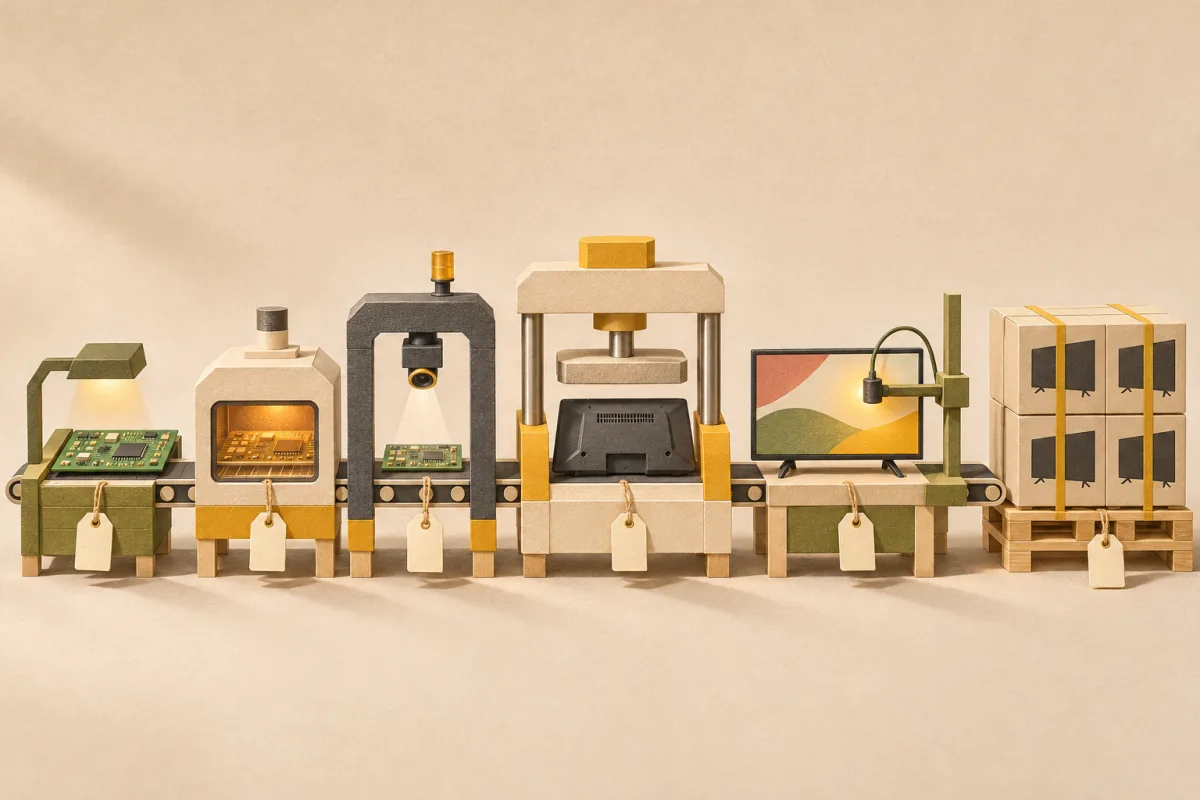
When a factory closes, its machines are usually sold at auction, and the catalogue is public. Read it in the order a product would travel through the building and you can rebuild how the plant worked: what came in, what was made on site, how it was checked and how it left. Samsung's plant in Galanta, about 60 km from Bratislava, is a good example. Its two auctions list 511 lots, and almost every stage of making a television is in them.
1. The closure, in brief
Samsung Electronics Slovakia confirmed on 27 February 2026 that it would close the Galanta television plant, phasing production out in several stages by May 2026, with staff leaving from the end of June. The plant opened in July 2003. Samsung's logistics centre in nearby Gáň, with about 700 people, stays open (TASR, 27 February 2026). Reports of the number of jobs lost range from about 750 to 800.
It was once much bigger. In a 2011 video report from inside the plant by Ondrej Macko, Galanta employed about 2,200 people with an average age of around 32, could make 20,000 to 25,000 televisions a day, and ran four shifts including weekends at peak. It made LED and 3D televisions then, and the report shows finished sets being tested at 50 °C and on a vibration line. The LED panels came from Samsung's second Slovak plant in Voderady, which closed in 2018.
Galanta was more than a TV assembly plant. Since 2023 it also built The Wall, Samsung's modular microLED display, a screen made of tiles that bolt together into walls several metres wide. According to invidis in January 2024, Galanta supplied more than 90 percent of The Wall units sold in Europe and was one of three plants making it, with Ho Chi Minh City and Mexico.
In November 2026 the equipment went to auction with Maynards and Gordon Brothers: Day 1, SMT and electronics (184 lots, closing 25 November) and Day 2, injection molding and factory assets (327 lots, closing 26 November).
2. What came in, and what did not
Start with what is absent. Nothing in either catalogue can make LCD glass or grow LEDs. The panels arrived finished from Samsung's panel suppliers, as they do at most television plants. Galanta's job was the electronics, the housings, final assembly, calibration and testing.
The second gap is more surprising. The circuit board lines are listed in full, with one exception: the pick-and-place machines that put components on the boards are not in the sale. They were probably moved or sold separately. A catalogue only shows what is offered, so a missing machine is a question, not an answer.
There are no metal presses either, so the steel frames and brackets inside each set were made somewhere else. A clue sits in a separate Maynards sale. Samsung's Hungarian company, Samsung Zrt., is offering a complete six-stage stamping line "formerly used for the Production of TV Frames": six SIMPAC presses of 600 and 800 tonnes, built in 2022, fed from a coil of sheet steel. The listing does not say which plants those frames went to, so treat the link to Galanta as a plausible guess, not a fact. It does show that the metal half of a Samsung television came from a different line from the plastic half.
3. Making the circuit boards
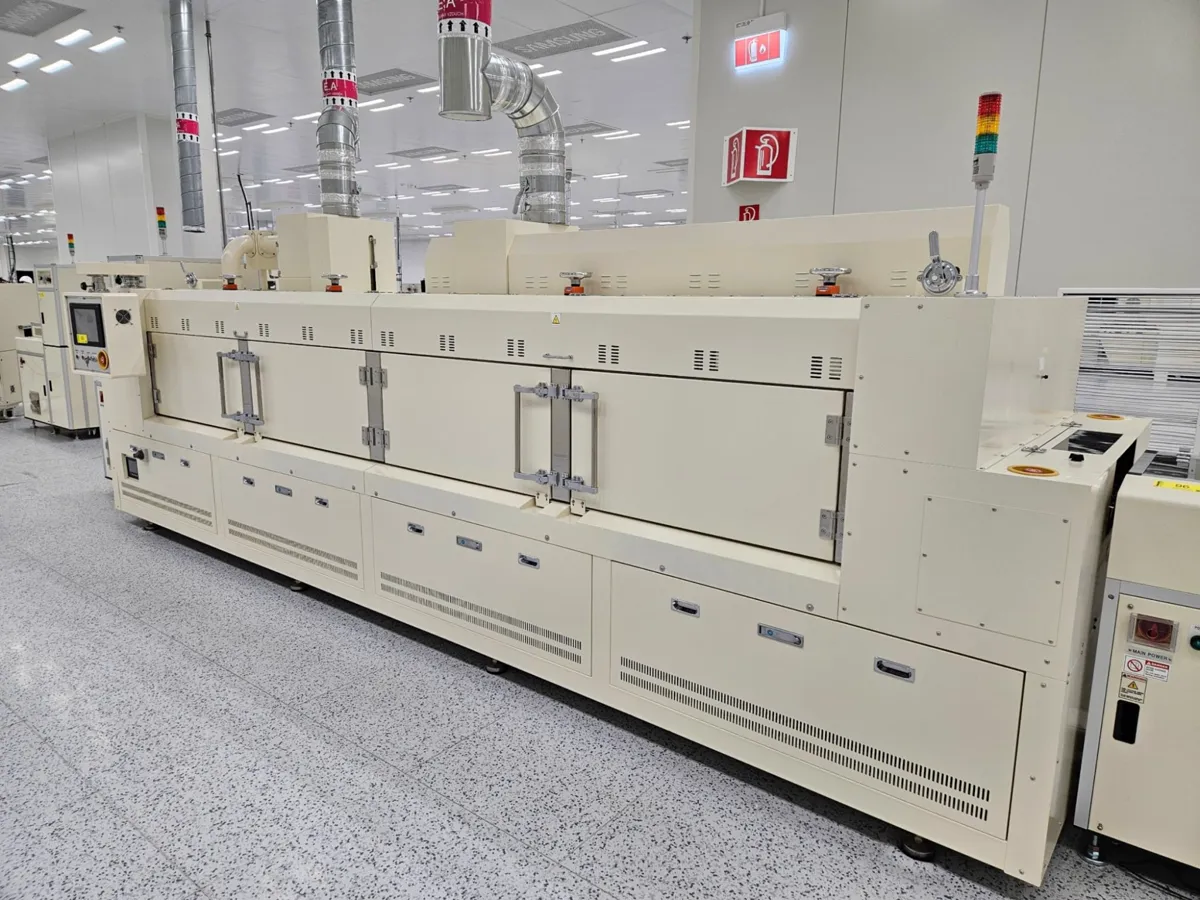
Every television contains several circuit boards: a main board, a power board and boards that drive the panel. Day 1 holds the lines that made them, and the order of the machines is the order of the process.
- 01
Mark and clean
A laser marking system engraves a code on each bare board so it can be traced, then particle cleaners and a plasma cleaner prepare the surface.
- 02
Print solder paste
Screen printers push solder paste through a steel stencil onto the board. A metal mask cleaner washed the stencils.
- 03
Check the paste
3D inspection machines measure every deposit of paste before any part is placed, because a bad print is cheap to fix now and expensive later.
- 04
Melt the solder
After placement, boards ride through long reflow ovens that melt the paste and fix the parts in place.
- 05
Inspect, program, test
Cameras in in-line vision inspectors check each joint, programming handlers load firmware onto the chips, and electrical testers and rework stations catch and repair faults.
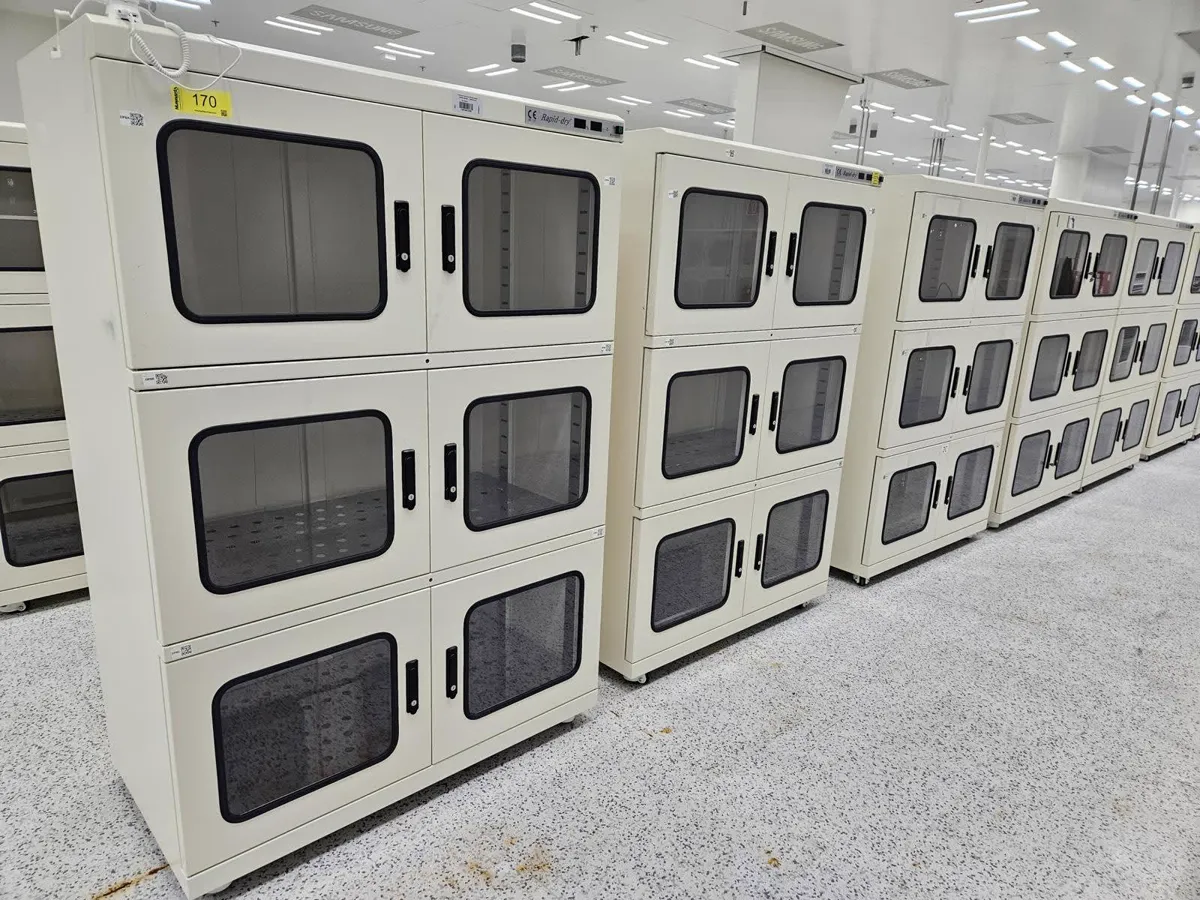
Dozens of conveyors, loaders and buffers from one Korean supplier, Ki Heung, tied the stations together. Seven lots of dry cabinets, 36 cabinets in all (example), kept moisture-sensitive chips dry before use.
4. Building The Wall, one tile at a time
This is the part of the catalogue closest to actually making a screen. A microLED tile is a circuit board covered in tiny LEDs, each one a pixel. The machines show how those tiles were finished, checked and repaired.
Around those labelled lots sit the rest of the tile process, as far as the listings show it:
Pixel-level rework
COB removers (chip-on-board, LEDs mounted directly on the board) and laser solder removal and dotting machines point to removing faulty LEDs and preparing the spot for a replacement.
A smooth black face
A 7.5-tonne UV molding machine and an autoclave rated 9 bar and 100 °C suggest a clear protective layer cured with UV light, then pressed free of bubbles.
Black and uniform
A black colour inspector and an LED module inspection rack checked that every tile looks the same when off and when lit, which matters when hundreds sit side by side.
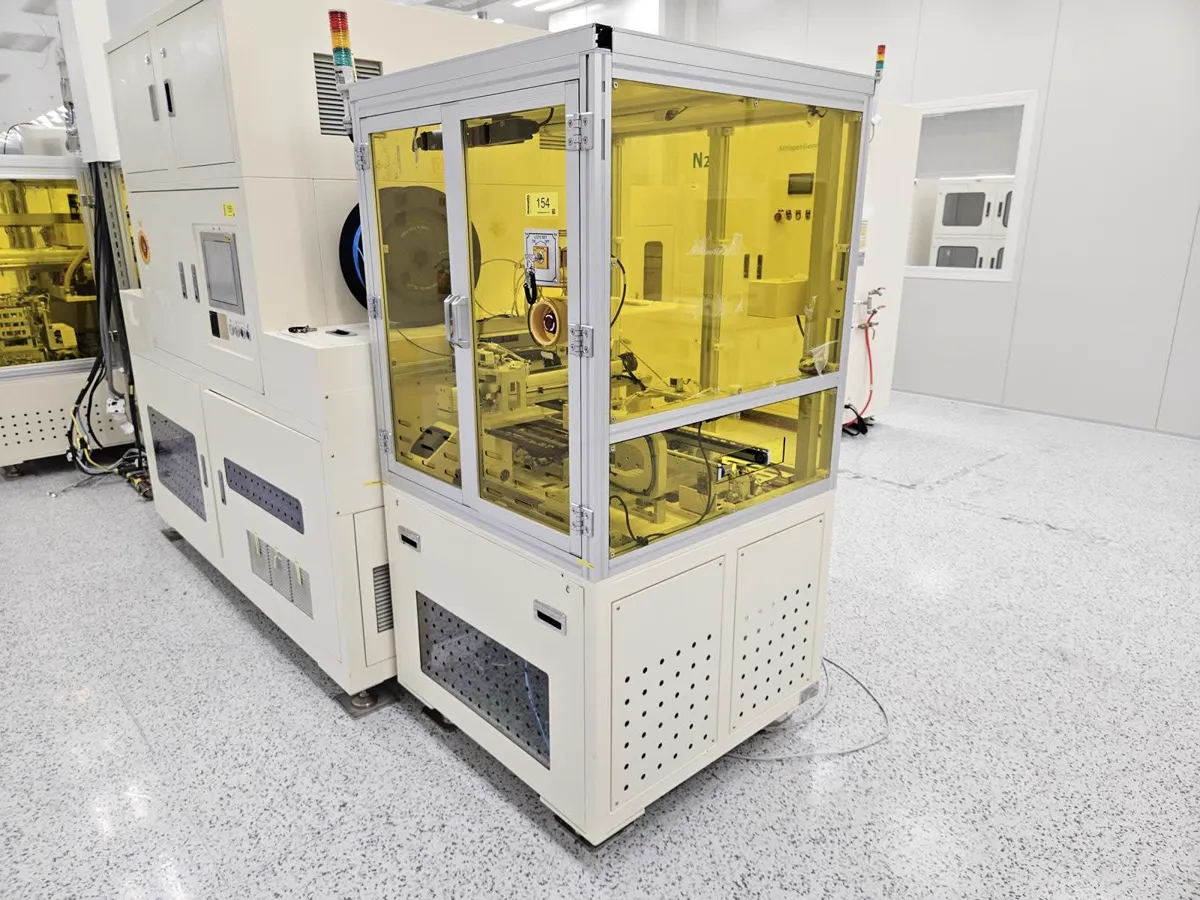
Flux sprayers (example) and a 3.5-tonne cell dispensing machine with UV LED controllers complete the picture. The exact recipe is Samsung's; the order of the machines is all the catalogue gives away.
5. Molding the housings
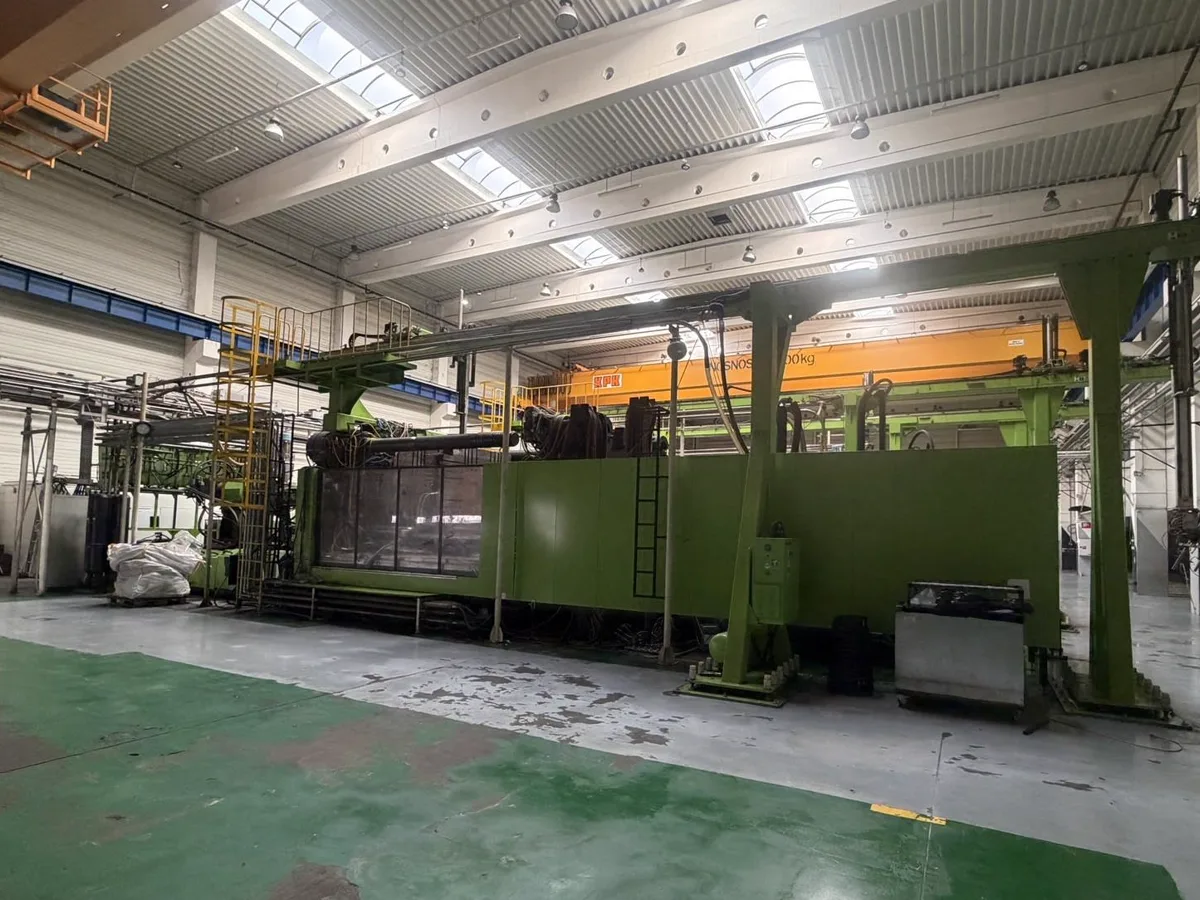
Day 2 opens with the heaviest lots in the sale: seven Engel DUO injection molding machines from 2008 and 2009. The last number in each model name is the clamping force in tonnes, from 1,700 to 3,200, and the machines weigh 25 to 32 tonnes each (1,700-tonne example, 2,300-tonne example). Force on that scale is for large flat parts such as television back covers. Several are "Combi" machines with two injection units, which can mold two materials or colours into one part.
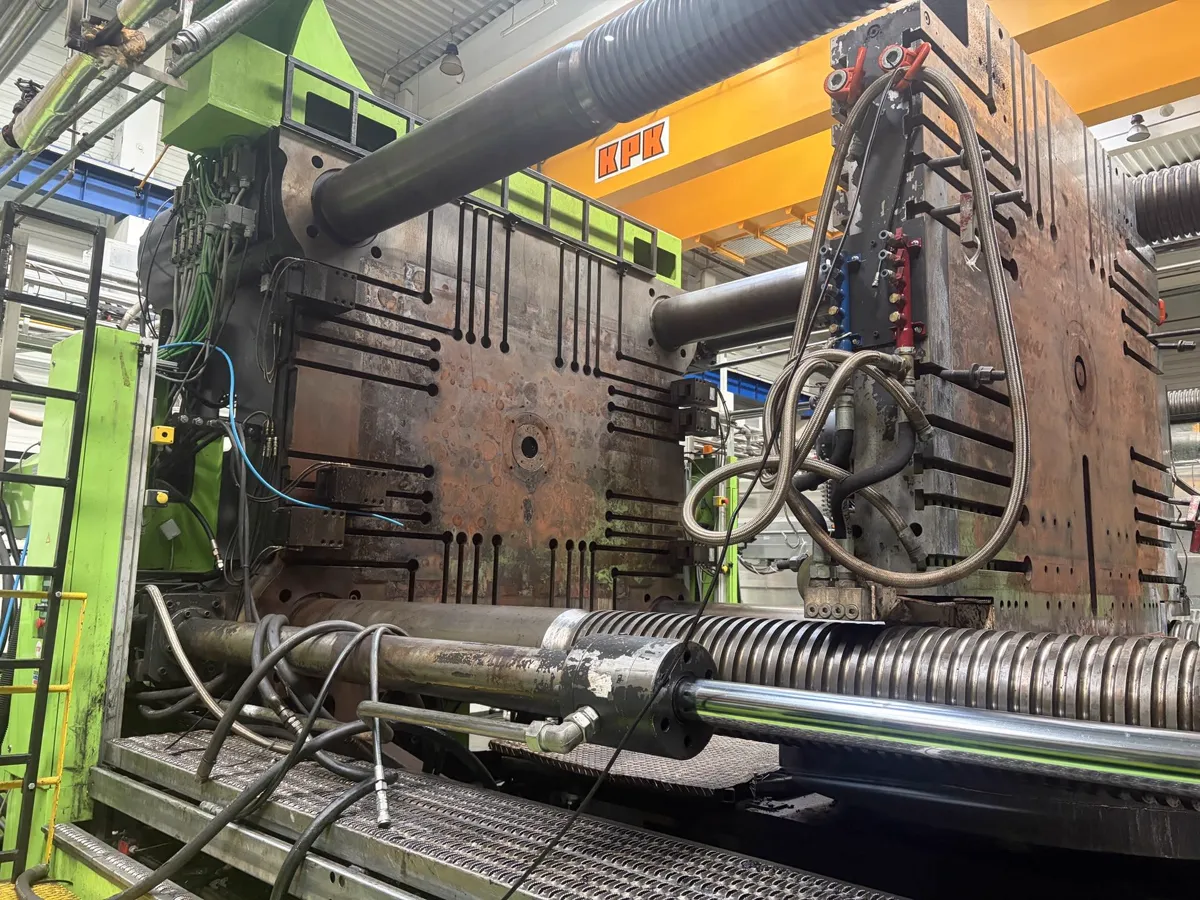
Around them: resin dryers that dry plastic pellets before molding, take-out robots, and newer KUKA robots from 2025, a sign that the plant was still being automated a year before it closed.
6. Bringing each television to life
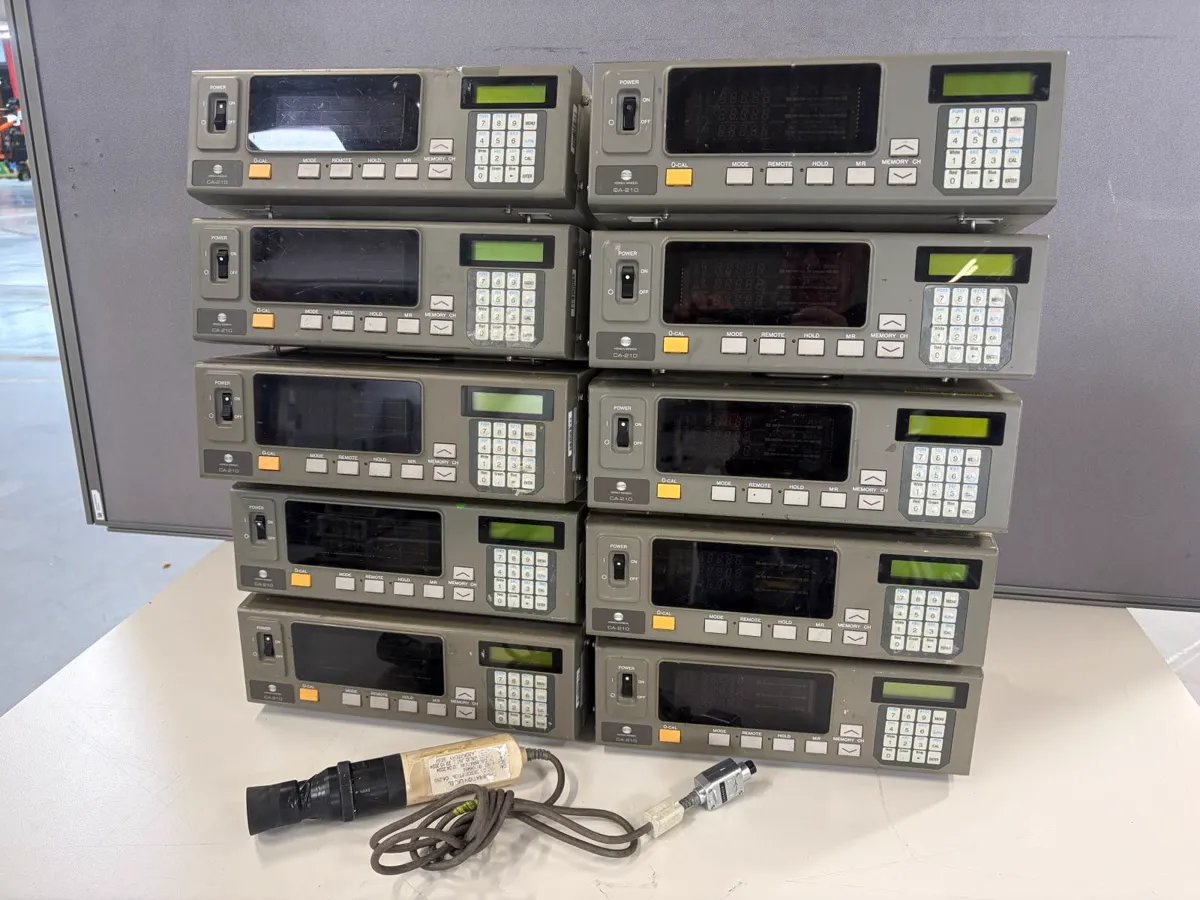
The final test area is where the catalogue becomes almost a headcount. Day 2 lists more than 100 Konica Minolta colour analysers and probes, 91 of them the CA-210 model (a lot of ten). A colour analyser is a probe held against a lit screen that measures its colour and brightness, so the set can be adjusted until white looks white. Owning a hundred of them means many calibration stations working at once, with each television tuned before it was boxed.
The same area held video signal generators that feed test patterns into each set, a Rohde & Schwarz test transmitter that imitates a broadcast signal, electrical safety analysers for high-voltage insulation checks, and an EMI test receiver that checks a product does not interfere with radios and phones. A TAB and PCB rework machine repaired the thin film connections between a panel and its driver boards.
7. The quality lab and the loading dock
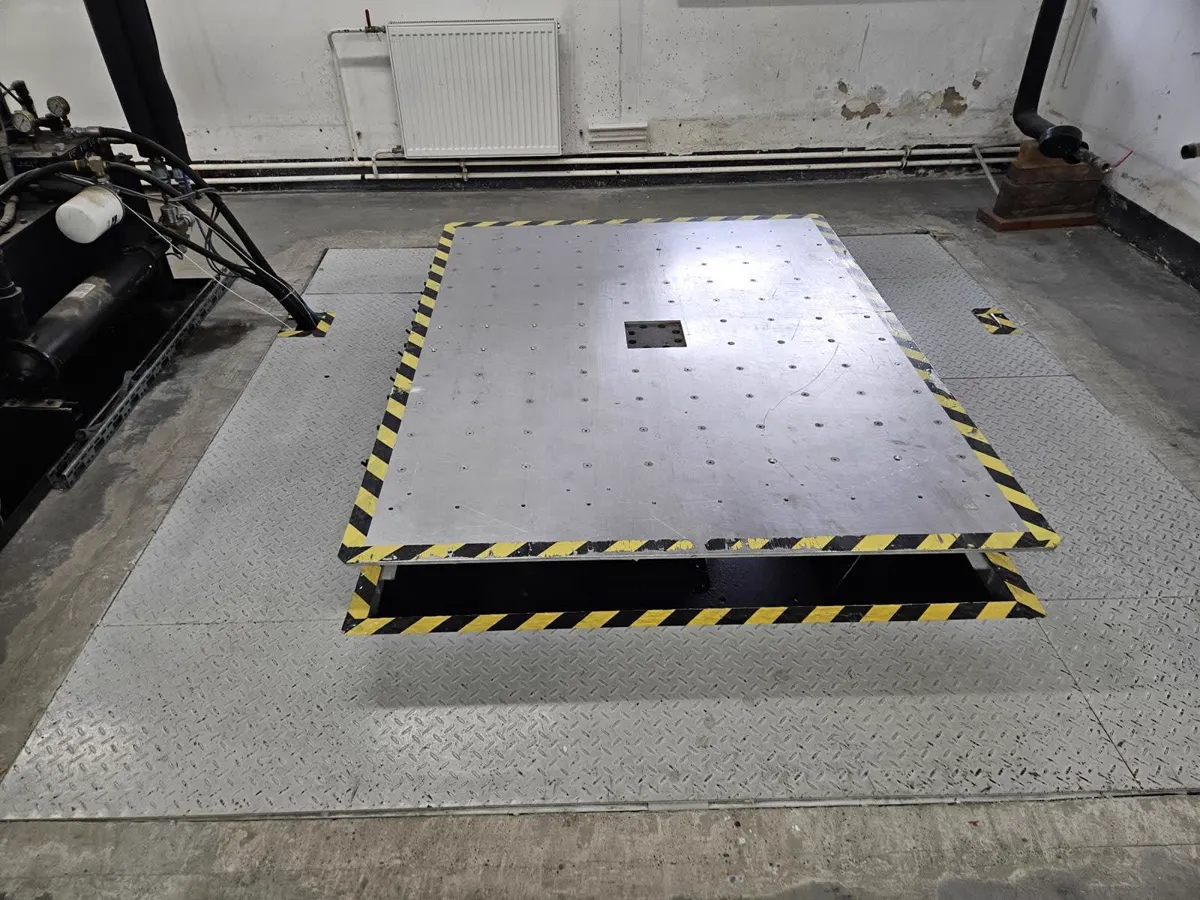
A quality lab tested what customers never see. A drop tester and a hydraulic vibration table checked that a boxed television survives a lorry journey.
An FTIR spectrophotometer and an X-ray fluorescence spectrometer identify materials, the kind of instruments used to check incoming plastics and to confirm that parts contain no restricted substances.
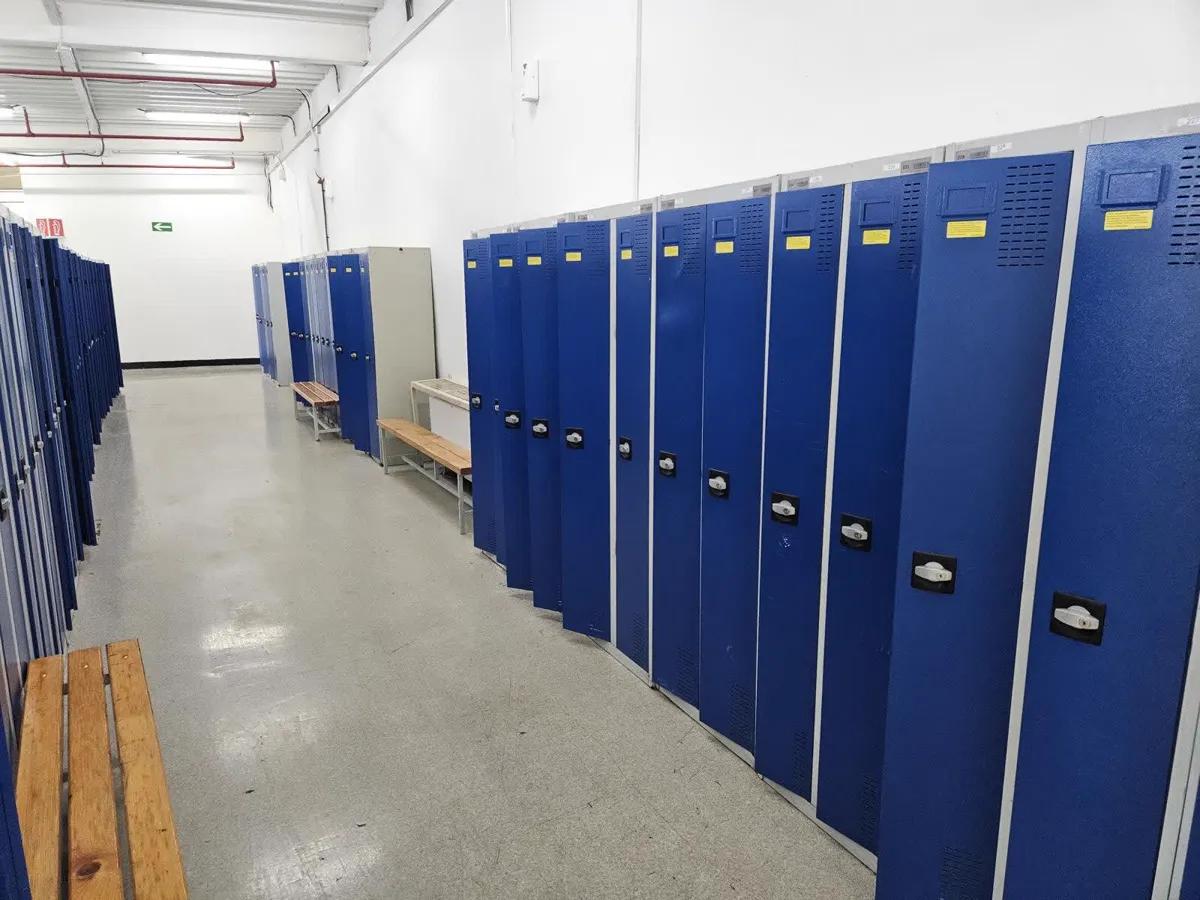
At the end of the line: 24 pallet wrapping machines (example), nine Jungheinrich order-picking forklifts (example) for high racking, and conveyors leading out. Then the people: the auction includes about 830 metal lockers (a lot of 74), close to the 750 to 800 jobs reported lost.
8. How to read any factory auction this way
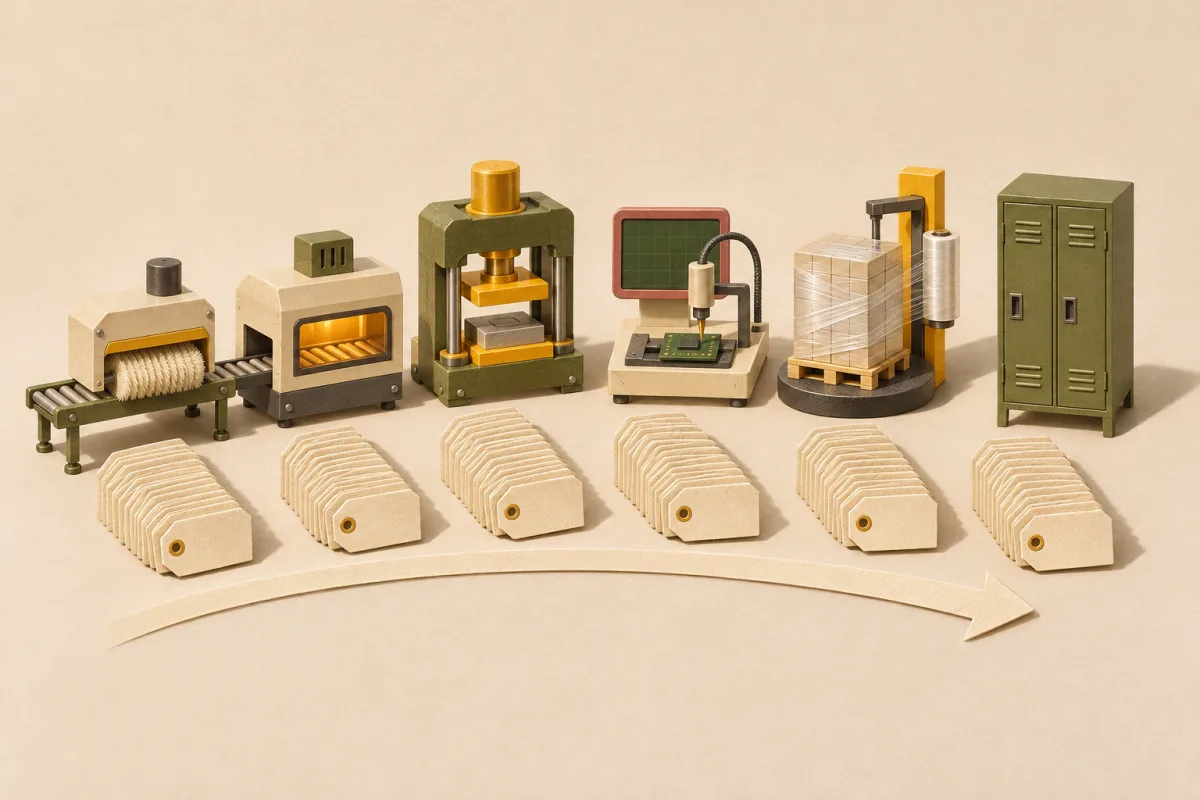
The method works for any plant that closes or downsizes, and auction houses publish dozens of these catalogues every month.
- 01
Group lots by job
Ignore brand names at first. Sort lots into cleaning, joining, shaping, testing, packing and storage.
- 02
Order the groups
Put the groups in the order a product meets them. The line usually becomes obvious.
- 03
Read the rating plates
Lot descriptions often copy the plate, and plates carry internal names such as "The Wall" or "LED Underfill". Those are the best evidence in the catalogue.
- 04
Count, then compare
A hundred calibration probes or eight hundred lockers says something about scale. Compare counts with reported headcount and output.
- 05
Notice the gaps
Missing machines may have been moved to a sister plant, sold privately or leased. Treat a gap as a question to check, not a conclusion.
Galanta made televisions for more than two decades and, for its last three years, most of the microLED walls sold in Europe. The catalogue is a careful inventory of that work, and for a few more weeks it is open for anyone to read. Closures, relocations and asset sales like this one are the kind of company moves Evolc tracks in its moves feed.